For fuck’s sake, fuck around
Here I make the case for why you should fuck around more and find out.
Here I make the case for why you should fuck around more and find out.
Post type: In-the-moment reflection Epistemic status: Not very sure. I’m thinking this through out loud. This is more of a placeholder for future thought than a finished argument — something to return to with more reading, more perspectives, and more time. Treat it accordingly. How this was written: I dictated the…
Read the note →True dat. Even commentators who spend a lot of time fretting about the modern-day ‘crisis of distraction’ rarely seem to grasp the full implications of this. For example, you hear it said that attention is a ‘finite resource’, and finite it certainly is: according to one calculation, by the psychologist Timothy Wilson…
Read the note →A few good rabbit holes for your enjoyment. --- A few things to move you and rouse you from The Marginalian: As a person with remarkable talent for getting in my own way, this one hit hard: In a sentiment he would later deepen in his moving 2013 Syracuse commencement address, he adds: > So what is stopping me from…
Read the note →I recently got to meet Vasanth, Ashok, and Shishir from Mundhe Banni (ಮುಂದೆ ಬನ್ನಿ). Such a wonderful name. In Kannada, Mundhe Banni means “come forward.” What these folks are trying to do is support entrepreneurs who come from small towns and villages, places where there is no real support system for people who want to…
Read the note →Everybody should have a blog and here’s why: Writing is easily one of the best forcing functions for learning about new things, thinking through them, and sharing your perspective with other people. And there’s a reason it’s a forcing function: the moment you start typing, your half-formed opinions tend to crumble. All…
Read the note →I was reading Four Thousand Weeks: Time Management for Mortals by Oliver Burkeman, and this particular bit stood out to me because it connects with something I’ve been thinking about for a long time. But smoothness, it turns out, is a dubious virtue, since it’s often the unsmoothed textures of life that make it…
Read the note →In a sentiment evocative of Kurt Vonnegut’s short poem about the secret of happiness and of Viktor Frankl’s hard-earned conviction that “everything can be taken from a man but one thing: the last of the human freedoms — to choose one’s attitude in any given set of circumstances,” Berry adds:
In these times one contemplates it with the same sense of hope with which one contemplates the sunrise or the coming of spring: the image of a man who has labored all his life and will labor to the end, who has no wealth, who owns little, who has no hope of changing, who will never “get somewhere” or “be somebody,” and who is yet rich in pleasure, who takes pleasure in the use of his mind! Isn’t this the very antithesis of the thing that is breaking us in pieces? Isn’t there a great rare humane strength in this — this humble possibility that all our effort and aspiration is to deny?
File under AI as normal technology:
History shows that the process almost always takes longer than the inventors expect. Legal and regulatory hurdles slow things down. Companies have to retrain workers or hire new ones. Corporate leaders have to develop new processes and overcome resistance from reluctant managers and cautious information technology departments.
“These conversations have been, in my opinion, overly focused on what the technology can do,” said Martha Gimbel, the executive director of the Budget Lab at Yale University. “There’s plenty of technology that could have changed things and didn’t.”
Many hospitals kept patients’ health records on paper for decades after the technology existed to digitize them, Ms. Gimbel noted. Videoconferencing tools have existed for years, but it took a pandemic to force companies to embrace them.
This is about despotism. But when you read it out of context, this is a good description of 21st-century life and about the side effects of overreliance on AI as well. I seek to trace the novel features under which despotism may appear in the world. The first thing that strikes the observation is an innumerable…
Read the note →
I am a big fan of Simon Willison even though I am not a coder, and I read his blog religiously. It’s one of the easiest ways for non-coders to keep track of the pace of progress happening in AI. I’ve yet to listen to this interview, but this summary by Lenny Rachitsky was interesting. 2. Mid-career engineers are the…
Read the note →Damn, this is scary:
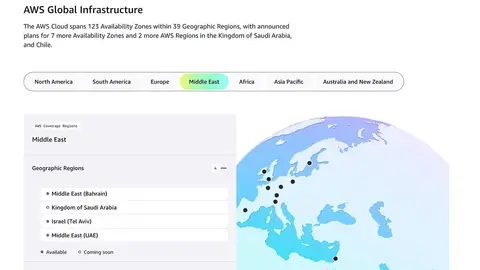
Iranian strikes have rendered two Amazon Web Services availability zones “hard down” in Dubai and Bahrain and the company expects them to be “unavailable for an extended period,” according to internal Amazon communication reviewed by Big Technology.
Within Amazon Web Services, the strikes have rendered so much damage that employees have been advised to deprioritize both regions.
A good summary of some recent research papers and articles on AI by Andrew McAfee.
Gauti Eggertsson responding to this link on how should PhD students think about AI tools. Of course I agree. The best way to not sound like an idiot about AI tools is to put them through the paces.
Good advice. This is a major regime change, you can do things in one evening now, that would take months before. I agree with the notion — even if nobody knows at this point where this goes — that it makes a lot of sense to invest a lot in knowing how to use these tools. Then the biggest bang for the buck will be conceptual ideas, posing useful question, the returns on investing in technicalities, and very specialized solution methods are lower, they are very easily replicated by AI. What you need to know is enough to verify if the answer is correct or not and the answer is replicable.
Good advice: He then returns to the psychological payoff of this trying practice: > Don’t get discouraged because there’s a lot of mechanical work to writing. There is, and you can’t get out of it. I rewrote A Farewell to Arms at least fifty times. You’ve got to work it over. The first draft of anything is shit. When…
Read the note →
Gemini’s web chat app is unusable and, to be honest, despite all the hype and hoopla, it kind of sucks. But surprisingly, my experience using their APIs has been really, really good, even compared to the likes of Claude and OpenAI in a lot of cases. For a lot of these high-volume tasks, I’ve been heavily using Gemini 3…
Read the note →
Russia is not running out of new soldiers to send to the meat grinders in Ukraine: The main sources of data on new recruits signing up are federal and regional budget spending reports, which include a separate section on bonuses paid for signing military contracts. The sizes of the bonuses paid at both the federal and…
Read the note →I’m not a religious person. I think there are traces, but more or less, I’m not a religious person. I have few traces remaining, thanks to the fact that I grew up in a religious household, and my parents are still deeply religious. Depending on the day you ask me, and depending on what I’ve read the previous day, I…
Read the note →This week’s digest Venkatesh Rao is consistently one of the most thoughtful people online. He is one of my favorite writers and one of the sharpest observers of whatever is happening around us, especially in technology. I have been following his thoughts on AI, specifically on making things with AI and more…
Read the note →This is a beautiful post by Ted Gioia on the mysterious pain that afflicted him and how we went about figuring out the exact cause.
The first time this happened, I jumped out of bed and ran to get an ice pack from the freezer. I pressed the ice pack to my face and—surprise!—this just made the pain even worse. I’m fortunate that the fire only lasted around sixty seconds, but if I tried to go back to sleep, it could happen again a few minutes later.
My nights now became perilous. I found that the only way to sleep without risk was to remain absolutely motionless on my back—even the slightest movement could bring on another attack.
The second lesson is that we are in an age when those “hard industries” matter. Yes, Big Tech stocks have soared in recent years amid excitement about AI. But the Iran war shows that countries are very vulnerable if they lack industrial processes, however old-fashioned. “The old economy begins to take its revenge,” Jeff Currie, analyst at the US private capital group Carlyle, recently noted. “You can’t print molecules,” even with AI.
Nick Maggiulli writes that AI disruption will be the same as previous technological shifts:
Some will argue that “this time is different” because AI is replacing knowledge work, not just physical work. And, if this comes to pass, what will there be left for people to do?
It’s a compelling argument, but people made similar arguments about the automation of physical work. There was literally a group of people in England in the early 1800s called the Luddites who destroyed weaving machines due to their adverse impact on textile workers.
The Luddites couldn’t imagine what would replace their livelihoods and the same is true for us now. There will be future roles that require a different set of human skills that we can’t even imagine today. These skills won’t directly compete with LLMs, but will enhance them.
The Times says the move is driven by concerns about AI companies scraping news content. Publishers seek control over how their work is used, and several—including the Times—are now suing AI companies over whether training models on copyrighted material violates the law. There’s a strong case that such training is fair use.
Whatever the outcome of those lawsuits, blocking nonprofit archivists is the wrong response. Organizations like the Internet Archive are not building commercial AI systems. They are preserving a record of our history. Turning off that preservation in an effort to control AI access could essentially torch decades of historical documentation over a fight that libraries like the Archive didn’t start, and didn’t ask for.
If publishers shut the Archive out, they aren’t just limiting bots. They’re erasing the historical record.
Good advice from Tyler Cowen:
If strong AI will lower the value of your human capital, your current wage is relatively high compared to your future wage. That is an argument for working harder now, at least if your current and pending pay can rise with greater effort (not true for all jobs).
Beautiful 🤩
Out of the night that covers me
Black as the pit from pole to pole,
I thank whatever gods may be
For my unconquerable soul.In the fell clutch of circumstance,
I have not winced nor cried aloud.
Under the bludgeonings of chance
My head is bloody, but unbowed.Beyond this place of wrath and tears
Looms but the Horror of the shade,
And yet the menace of the years
Finds, and shall find, me unafraid.It matters not how strait the gate,
How charged with punishments the scroll,
I am the master of my fate
I am the captain of my soul.

Attention is first philosophy.
Read the note →One of my favourite sites on the internet. I hope it survives the end of time itself:
28 years of kottke.org, as of today. Older than Google. Older than The Matrix. Older than Christopher Nolan’s feature film career. Older than Elle Fanning. Older than Kurt Cobain when he died. 47,300 posts since March 14, 1998. It might outlast American democracy.
Found the link on https://smallweb.blog
Files under Claude Code are good enough to solve a whole host of peculiar problems peculiarly specific to you. Welcome to the age of home-cooked software.
Read the note →A writing maxim I want to tattoo on my hand: Stop trying be smart. Just be honest about how you feel.