Bhuvan.Essays, notes and small websites
Notes · 474Page 4 of 16

Short things, kept in the open. A commonplace book, formerly rabbitholes.garden.

Links worth your time with a line on why, quotes, verse, half-thoughts and the occasional rant. Longer pieces live in writing. Follow along by RSS.

Note

China’s AI gift to the world

What is this? A rambling, status-post-shaped voice note. How sure am I? Reasonably sure about the broad argument. Much less sure about how the technology, economics and geopolitics will unfold from here. Disclosure: I dictated most of this into ChatGPT and used it heavily to clean up the voice notes, organise the post…

Read the note →
Rabbit Holes · rabbitholes.garden ↗Rabbit HolesA public commonplace book: links, quotes, poems and stray thoughts, gathered as they struck me.
rabbitholes.garden ↗
Link

RSS is cool!

I don’t know enough about the technology itself—whether it’s actively being maintained or where it’s heading—and I can’t speak to all the historical details, but it seems accurate enough. The plain fact is: RSS is so fucking cool.

Even today, I rely heavily on RSS feeds to keep track of posts from all the blogs and writers I follow. I even built a small tool called **Small Web** where I curate lists of newsletters and blogs I read, with all new posts automatically appearing on the feed.

On every project I build, I make it a point to add an RSS feed so people can subscribe. It’s easily one of the best ways to follow the web.

openrss.org ↗How Google helped destroy adoption of RSS feedsLearn how one of the biggest tech companies played a major role in the reason many people stopped using RSS feeds
openrss.org ↗
Link

China envy

Whethet you agree with or not Glenn always has interesting perspectives on China. I always learn something from his tweets: “China has gotten ‘pretty good’ at developing its economy” is something that many people are clearly loathe to admit. That is why many seem to gravitate towards flawed, simplistic macro-based…

Read the note →
Glenn @GlennLuk · July 31, 2026 ↗Certain macro analysts keep focusing on the sheer *size* of China’s subsidies when what they should be focused on is the developmental experience and track record by the people making these subsidy allocation decisions. Other countries can match China’s % subsidy levels but the…
x.com ↗
Link x.com ↗
Note

OpenAI’s models hacked Hugging Face

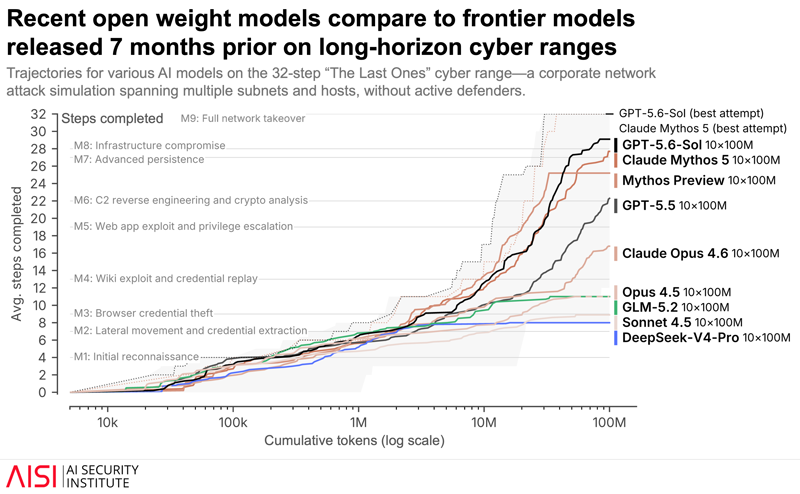
This is wild. OpenAI was testing GPT-5.6 Sol and a more capable internal research model on ExploitGym, a benchmark that measures whether AI agents can turn software vulnerabilities into working exploits. The models were placed in what was supposed to be a highly isolated environment without direct internet access. But…

Read the note →
The New Yorker · newyorker.com ↗Inside OpenAI’s Hack of Hugging FaceHugging Face’s chief science officer recounts the cybercrime that signals a terrifying new era for A.I.
newyorker.com ↗
Link

Solve the right problems

This has been my experience with LLMs as well.
I often see posts from people with fancy, complex setups for coding with AI, claiming that doing X or Y leads to some ridiculous output. It used to make me feel a bit jealous—like I was missing out or using these tools completely wrong.

But whenever I actually sit down and use these coding tools, even with the most basic approach, the thing I set out to build eventually gets done. More often than not, I stick to projects I think are important or fun, and things just work out.
This post was a nice reminder of that whole dynamic

I often think about that story when browsing X. Every day, someone invents a new way of working that promises to change everything. Some probably will. But ultimately what matters most is solving the right problems.


frantic.im ↗The Productivity MirageWhat I once thought about programming productivity was wrong
frantic.im ↗
Link

The life of a Banchhada girl

This is horrific: Unlike Savitri’s daughters, most girls in the community are born into a system in which their families expect them to enter sex work — a practice passed down over generations. According to several members of the community and NGOs in the region, while many Indians celebrate the birth of a boy over a…

Read the note →
The Hindu · thehindu.com ↗Celebrated at birth, pushed into sex workUnlike most communities in India, Banchhadas in M.P., branded a criminal tribe by the British, invest more in their daughters’ upbringing, only so that they can force them into sex work and live off their earnings;…
thehindu.com ↗
Link

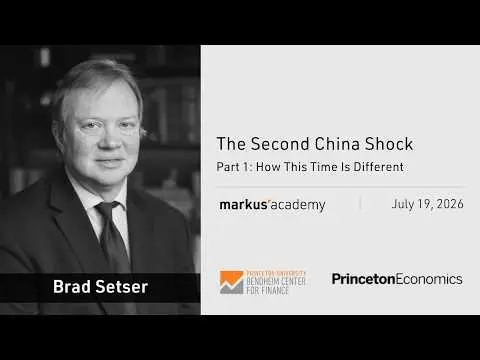
Brad Setser on China Shock 2.0

​Brad Setser is one of the go-to experts if you want to understand global imbalances, the political economy of China, and the complexities of currency movements. Regardless of whether you agree with him or not, he always backs up his assertions with data—which sets him apart from a lot of other commentators in…

Read the note →
YouTube · youtu.be ↗The Second China Shock - How This Time Is Different with Brad Setser | Markus Academy | Ep. 165-1Markus' Academy on YouTube
youtu.be ↗
Link

Hyperpolitics

I’m a huge fan of Anton Jäger, and I’ve been reading his writing for a long time. I’m yet to read Hyperpolitics, but I’ve heard several podcasts in which Jäger has spoken about the concept. The concept offers a useful lens to make sense of the contemporary political landscape and its interactions with the civil society:

Hyperpolitics is what came next: intense politicisation, with neither institutional roots nor ambitions. “On the surface,” Jäger writes, “the Black Lives Matter protests would seem to have little in common with the mob that stormed the Capitol in January 2021. Morally, they are worlds apart … Organisationally, however, these movements exhibit a striking set of similarities: fleeting in duration, they maintain no membership rolls and struggle to impose any real discipline on their adherents.” As a consequence, everything explodes and nothing changes; movements surge suddenly forward and yet no territory is taken. He quotes political theorist Paolo Gerbaudo’s contemporary interpretation of the evocative phrase “bodies without organs”. Modern political movements, he writes, are “concentrated and muscular, yet without an internal metabolism”.

the Guardian · theguardian.com ↗Meet the man whose groundbreaking book is being devoured by the leftAnton Jäger has been lauded for his exceptional ability to make sense of these strange political times – and he’s only 32. The writer and academic explains why we’re living in an age of hyperpolitics
theguardian.com ↗
Note

China and global imbalances

It’s China’s world and the rest of us are living in it. One of the persistent stories of the last decade has been the relentless rise in Chinese exports and what that’s done to everyone else. Arvind Subramanian, the former chief economic adviser, has been making a version of this argument at the Peterson Institute. His…

Read the note →
Brad Setser @Brad_Setser · July 28, 2026 ↗It isn't every day that the last two chief economists of the IMF join forces to push back against one of your arguments! The debate over the role of China's currency in the increase in China's surplus is an important one, and I am happy to have this debate in the open 1/
x.com ↗
Link

We’re all goldfishes

Fully relate to this feeling. Even as I was reading this post, I switched to check how Codex was doing with a few side projects I was working on and then go back to finishing reading the post :grimacing: I’m feeling it right now. I had to set a timer for 15 minute on my computer and block all distractions to write…

Read the note →
glyphack.com ↗
Link

Disenchated generation

As always, a brilliant and incisive analysis of the student protests by Pranay Kotasthane: The WhatsApp uncles and aunties generation that have seen the benefits of the two decades after liberalisation are content with their “settled” lives, their garba in Vietnam and their misguided belief about India’s standing going…

Read the note →
publicpolicy.substack.com · open.substack.com ↗#354 When Faced Against a Cannon...Protests and Education
open.substack.com ↗
Note

Perspectives on the student protests

Rahul Verma on the student protests: Governments find such protests much harder to confront because there is no obvious ideological counter-narrative. One can’t simply invoke nationalism or accuse every dissatisfied student of serving foreign interests when the grievance concerns administrative failure. The usual…

Read the note →
Note

Be more ambitious

The awesome Simon Willison hosted a session between Cat Wu and Thariq Shihipar from Anthropic’s Claude Code team. Given that I love Claude Code, I wanted to watch the full video but didn’t have the time to. So I was reading the edited transcript that Simon published, and this stood out to me: Thanks to Claude Code, I…

Read the note →
simonwillison.net ↗
Note

On the student protests in Delhi

The Wire on the student protests:

What makes this moment fundamentally different is that the public is no longer appearing terrified. Despite heavy police deployment, massive surveillance cameras and the use of tear gas and force, the sheer volume of everyday citizens, broke the atmosphere of intimidation. People didn’t just step out of their homes. They stepped out and converted individual isolation into a loud, collective voice.
By refusing to be divided, labelled or silenced, this student-led movement has stripped the Modi regime of its standard playbook, leaving the political leadership, which banks on Modi’s ‘strongman’ image is looking visibly unsettled and facing an unavoidable crisis of accountability.

thewire.in ↗
Note

Age of conspiracies

Thoughtful piece by David Wallace-Wells on the conspiratorial and paranoid turn of American society:

But what happens when history starts to resemble myth, when the inconsistencies reveal themselves not through deep study but in the most superficial scroll of our phones?

The new age of political paranoia obviously reflects a toxic efflorescence of grass-roots distrust, not to mention the structural pathologies of a new information environment. But sometimes I wonder whether we’re putting too much emphasis on those structures in trying to make sense of that paranoia. Is conspiracy theory downstream from culture, in other words, or from history? Is it a question of how information flows to us or what flotsam is coming our way? Probably the influence doesn’t run in just one direction, however comforting it may be to believe a less polluted information environment is just a few design tweaks away.

nytimes.com ↗
Note

It’s hard work remaining true to your heart

It’s hard work remaining true to your heart!

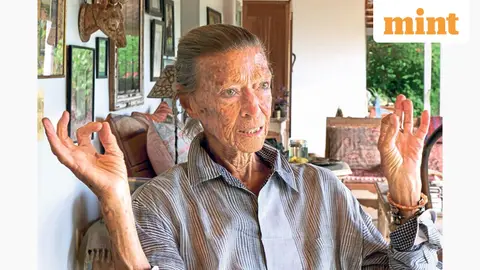
We do not grow up learning to go against the tide. I grew up in an upper middle-class family in India being groomed to success by following the rules. Someone like Loulou Van Damme, who seemed to follow her heart, would surely have alarmed my parents. But the more I spoke with her the more I realised how much hard work it is to remain true to your heart. “I fought for living this life,” she said simply. “I have some good angel with me. But I worked a lot.” Even Isla’s Ridge was a struggle. She said she was on the verge of cancelling the contract if CGH could not be persuaded to run it as the kind of guest house she had envisioned, rather than yet another luxury hotel.

Hat tip to Kush for sharing it.

mint · livemint.com ↗Sandip Roy: It takes hard work to remain true to your heart | MintFrom running a boutique store in Belgium to setting up a homestay in Tamil Nadu's Palani Hills, Loulou Van Damme has always chosen instinct over convention
livemint.com ↗
Note

I got some links for you

Will Oremus on why LLMs suffer from the “it’s not x, but Y” tic: Even if researchers could figure out exactly why chatbots embrace negative parallelism, there’s another factor that could make it very hard to fix: “When something gets into these models, it’s very hard to pull it out,” Masrour, the Pangram engineer…

Read the note →
Note

The act of seeing

Came across this wonderful quote in Days at the Morisaki Bookshop:

The act of seeing is no small thing. To see something is to be possessed by it. Sometimes it carries off a part of you, sometimes it’s your whole soul. - Motojirō Kajii

Link

Michael Muthukrishna makes the case for land and inheritance tax

If debt were inherited over generations, it’s easy to see how it would quickly leave some trapped in permanent multigenerational poverty, unable to escape no matter how hard they worked or how high an income they managed to secure. The interest on debt would compound over generations and eventually no amount of work would be enough for it to be paid off. Being trapped in debt is something many can understand. But the reverse – inherited wealth – has exactly the same effect on society.
A few people and their descendants, like

Benjamina and his magic money printer, have a distortionary effect and control over our society and our energy budgets, reducing the space of the possible, our ability to innovate, and ultimately preventing us from cracking the next energy level that leaves everyone better off. In turn, we gradually enter a new feudalism.

Evonomics · evonomics.com ↗Why Capitalism Works When Choosing Wealth Creation, Not Wealth Extraction - EvonomicsWealth creation and wealth appropriation are often conflated, but they must not be confused.
evonomics.com ↗
Link

Time to make web forums great again?

Brilliant post on the history of web forums! I came online too late for the heyday of web forums, but I’ve used a few. They certainly did have a distinct charm compared to modern social platforms. The reason it struck a chord is because I’ve been thinking of setting up a small forum online as a calm space to discover…

Read the note →
tedium.co ↗
Note

Is microfinance useful or useless?

In the 1990s, one of the dominant ideas in development economics was that poor people remained poor because they lacked access to credit. If only they could borrow, the argument went, they would invest in productive opportunities, grow their incomes, and escape poverty. That belief sparked the global enthusiasm around…

Read the note →
Link

Impact of heatwaves on labor productivity

Obvious but…

This article reviews recent economic studies on the causal effects of temperature on labor productivity. The negative effects of extreme temperatures are widespread, and the magnitudes of the impact differ across social and economic factors. In addition to physical outputs, extreme temperatures also impair mental productivity, including cognition and learning. In utero exposure to extreme temperatures has profound effects on human development. Although the literature has detected various adaptation strategies, the conclusions are mixed. We discuss some limitations of existing studies and propose several directions for future research.

annualreviews.org ↗
Note

India is now a one-party country

Two brilliant posts by Pranay Kotasthane and Amey Tirodkar capture something deeply worrying about Indian politics: the rising dominance of the BJP, and the slow drift towards what feels like creeping one-partyism. I’m not using words like authoritarianism because they often flatten the nuance of what is happening.…

Read the note →
Note

The internet is still good

The internet may be a dumpster fire. Much of it probably is. But there are still plenty of corners that haven’t been engulfed by the raging wildfire that’s laying waste to everything in its path. For all our complaints about the internet—and many of those complaints are entirely justified—it remains one of the greatest…

Read the note →
youtube.com ↗
Note

A few thoughts on AI-assisted writing

Nabeel Qureshi recently tweeted that the winning entry of the 2026 Harper’s Bazaar short story competition was written by AI. He posted a screenshot from Pangram, one of those AI-writing detection platforms. She sat on the bench opposite, the wood damp through her wool trousers – the Jigsaw ones from three years ago…

Read the note →