The tyranny of weak links
A good summary of some recent research papers and articles on AI by Andrew McAfee.
Gauti Eggertsson responding to this link on how should PhD students think about AI tools. Of course I agree. The best way to not sound like an idiot about AI tools is to put them through the paces.
Good advice. This is a major regime change, you can do things in one evening now, that would take months before. I agree with the notion — even if nobody knows at this point where this goes — that it makes a lot of sense to invest a lot in knowing how to use these tools. Then the biggest bang for the buck will be conceptual ideas, posing useful question, the returns on investing in technicalities, and very specialized solution methods are lower, they are very easily replicated by AI. What you need to know is enough to verify if the answer is correct or not and the answer is replicable.
Good advice: He then returns to the psychological payoff of this trying practice: > Don’t get discouraged because there’s a lot of mechanical work to writing. There is, and you can’t get out of it. I rewrote A Farewell to Arms at least fifty times. You’ve got to work it over. The first draft of anything is shit. When…
Read the note →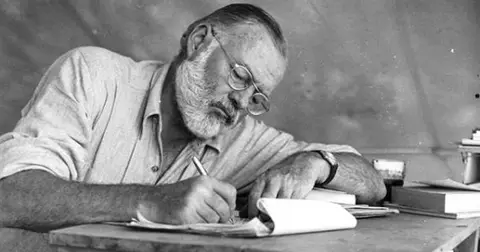
Gemini’s web chat app is unusable and, to be honest, despite all the hype and hoopla, it kind of sucks. But surprisingly, my experience using their APIs has been really, really good, even compared to the likes of Claude and OpenAI in a lot of cases. For a lot of these high-volume tasks, I’ve been heavily using Gemini 3…
Read the note →
I’m not a religious person. I think there are traces, but more or less, I’m not a religious person. I have few traces remaining, thanks to the fact that I grew up in a religious household, and my parents are still deeply religious. Depending on the day you ask me, and depending on what I’ve read the previous day, I…
Read the note →This week’s digest Venkatesh Rao is consistently one of the most thoughtful people online. He is one of my favorite writers and one of the sharpest observers of whatever is happening around us, especially in technology. I have been following his thoughts on AI, specifically on making things with AI and more…
Read the note →This is a beautiful post by Ted Gioia on the mysterious pain that afflicted him and how we went about figuring out the exact cause.
The first time this happened, I jumped out of bed and ran to get an ice pack from the freezer. I pressed the ice pack to my face and—surprise!—this just made the pain even worse. I’m fortunate that the fire only lasted around sixty seconds, but if I tried to go back to sleep, it could happen again a few minutes later.
My nights now became perilous. I found that the only way to sleep without risk was to remain absolutely motionless on my back—even the slightest movement could bring on another attack.
The second lesson is that we are in an age when those “hard industries” matter. Yes, Big Tech stocks have soared in recent years amid excitement about AI. But the Iran war shows that countries are very vulnerable if they lack industrial processes, however old-fashioned. “The old economy begins to take its revenge,” Jeff Currie, analyst at the US private capital group Carlyle, recently noted. “You can’t print molecules,” even with AI.
The Times says the move is driven by concerns about AI companies scraping news content. Publishers seek control over how their work is used, and several—including the Times—are now suing AI companies over whether training models on copyrighted material violates the law. There’s a strong case that such training is fair use.
Whatever the outcome of those lawsuits, blocking nonprofit archivists is the wrong response. Organizations like the Internet Archive are not building commercial AI systems. They are preserving a record of our history. Turning off that preservation in an effort to control AI access could essentially torch decades of historical documentation over a fight that libraries like the Archive didn’t start, and didn’t ask for.
If publishers shut the Archive out, they aren’t just limiting bots. They’re erasing the historical record.
This is true wisdom from William Blake.
Read the note →
Brilliant editorial analyzing the pathetic nature of American actions in Iran through the lens of Simone Weil’s prophetic writing.
Read the note →Interesting paper on the success of China’s solar industry: China’s solar success gives hope for industrial policy, but it cannot necessarily be replicated in all sectors. Part of the success is likely because solar is a relatively young, high-tech industry, with more opportunities for learning than a more mature…
Read the note →LLMs are like index funds. You get beta of humanity.
Read the note →
I keep thinking about this quote:
“There are no solutions. There are only trade-offs.” ― Thomas Sowell
This is not from The Onion but from the Financial Times:
Officials working with Donald Trump’s “Board of Peace” are exploring setting up a stablecoin for Gaza as part of efforts to reshape the devastated Palestinian enclave’s economy, according to five people familiar with the discussions.
The talks around introducing a stablecoin — a type of cryptocurrency whose value is pegged to a mainstream currency, such as the US dollar — are at a preliminary stage, and many details of how one could be introduced in Gaza remain to be determined.
What a beautiful article. It captures two ideas that I often think about. First idea: The sheer extent of our ignorance. We go through life thinking we know a lot, but in reality, what we know isn’t even a drop in the cosmic ocean. Yet thinking we know more than we actually do serves an evolutionary purpose—it prevents…
Read the note →A simple app to read eBooks with an AI reading companion by the side.
Read the note →Artificial general intelligence (AGI) for normal people is here.
Read the note →Robert Friedland on how much copper the world needs.
Read the note →Andrej Karpathy on coding with AI assistants: Given the latest lift in LLM coding capability, like many others I rapidly went from about 80% manual+autocomplete coding and 20% agents in November to 80% agent coding and 20% edits+touchups in December. i.e. I really am mostly programming in English now, a bit sheepishly…
Read the note →I was reading this article by Kyle Chan on the great reversal in technological dominance. Until recently, the West was the undisputed leader across “all” technologies, but now the tables have turned. China is now the top dog across a whole range of industries from EVs, solar, AI, robotics to pharma that Western…
Read the note →
Electric vehicles are reducing pollution:
For the analysis, the researchers divided California into 1,692 neighborhoods, using a geographic unit similar to zip codes. They obtained publicly available data from the state’s Department of Motor Vehicles on the number of ZEVs registered in each neighborhood. ZEVs include full-battery electric cars, plug-in hybrids and fuel-cell cars, but not heavier duty vehicles like delivery trucks and semi trucks.
Next, the research team obtained data from the Tropospheric Monitoring Instrument (TROPOMI), a high-resolution satellite sensor that provides daily, global measurements of NO₂ and other pollutants. They used this data to calculate annual average NO₂ levels in each California neighborhood from 2019 to 2023.
Over the study period, a typical neighborhood gained 272 ZEVs, with most neighborhoods adding between 18 and 839. For every 200 new ZEVs registered, NO₂ levels dropped 1.1%, a measurable improvement in air quality.
“These findings show that cleaner air isn’t just a theory—it’s already happening in communities across California,” Eckel said.
I asked Claude to write me an essay about Baruch Spinoza, his philosophy, big ideas and impact: Baruch Spinoza: The Philosopher Who Saw God in Everything Baruch Spinoza stands as one of the most radical and influential philosophers in Western history, yet his ideas remain surprisingly relevant to modern concerns about…
Read the note →What fills the work shaped hole in us in a post-work world?
Read the note →The way precious metals like gold, silver, palladium etc are trading is unreal. I have small gold and silver positions and the I haven’t seen things move the way they have in the last 3-4 since COVID.
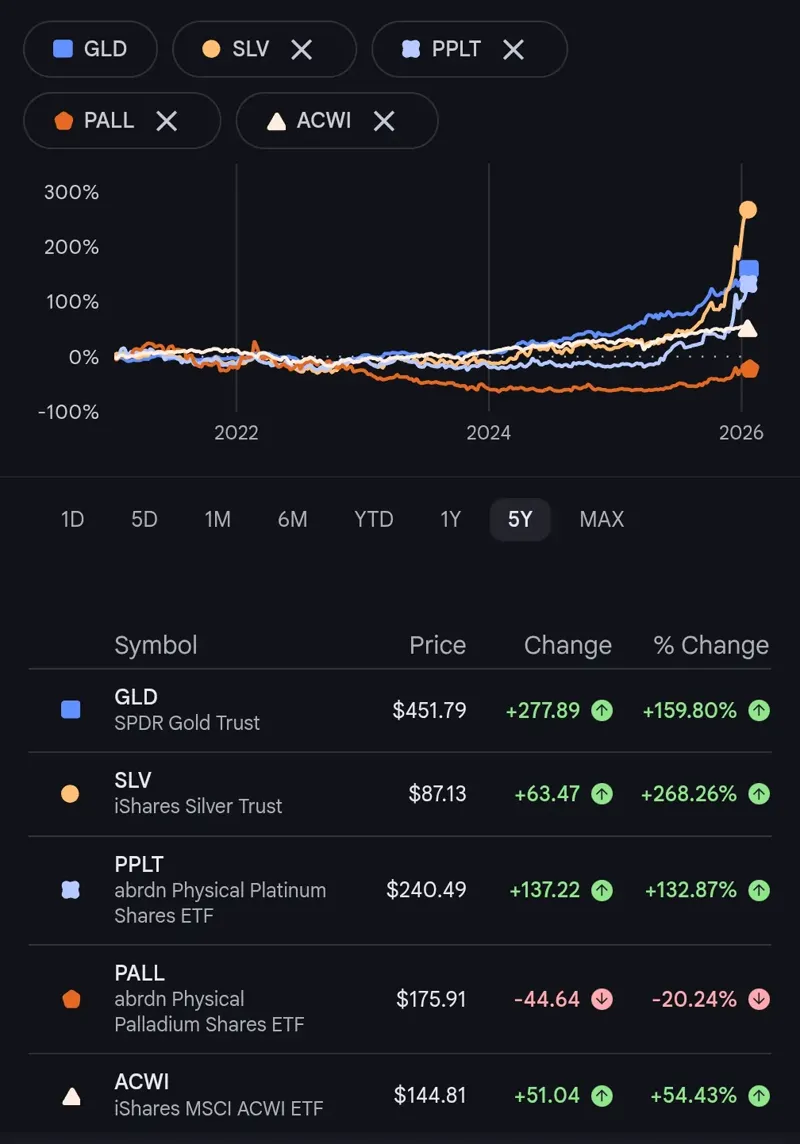 Robin Brooks thinks precious metals are rising because of fears of debasement.
Will Manidis on target once again. I’m starting to share a lot of his tweets here, hope I don’t get sued 😬
a huge part of success is simply not becoming blackpilled for as long as humanly possible. i know so many guys that could have achieved great things but get lost because they confused cynicism for wisdom. you must not get blackpilled, do well, and we’ll all be saved at the end.
Rachel Christine on whether books can teach you anything:
This is perhaps tangential, but I think the “books can’t teach you anything” argument comes from the accurate observation that most modern novels honestly can’t teach you anything. Classic literature was consumed with the struggle between good and evil; it obsessed over the question of humanity and its greater purpose; it scrutinized what it means to find true happiness. It was philosophy wrapped in the glory of a very human story. George Eliot knew that. Many modern writers do not. I know some who do, but they’re bound by the market and feel forced to write what sells. It’s time to repopularize excellent literature.
On the magic of conjuring software with plain English, voice-writing blog posts over filter coffee, and why I still can’t wrap my head around these times.
Read the note →Will Manidis hits the nail on its head:
the things that drive humans have been remarkably consistent across time, across technological progress, and across societies.
no matter what kind of millenarianism you are indulging in (ai, ufos, etc)— you can bet the forces of pride, greed, lust, gluttony, etc are constant